Latest Blog

AOPA Celebrates Healthcare Compliance & Ethics Week

WASHINGTON, DC – The American Orthotic & Prosthetic Association (AOPA) is pleased to announce that AOPA and its members will be celebrating Healthcare Compliance & Ethics Week (HCEW) November 5-11, 2017. AOPA is providing resources for AOPA members, most of them at no cost, to facilitate their participation in the celebration during the week and leading up to it.

“This week-long focus on compliance and ethics is a great opportunity for AOPA members to have meaningful internal dialog. It’s a way to introduce and reinforce the strong compliance and ethics standards that so many AOPA Members already epitomize and that their employees are expected to meet,” says AOPA President Michael Oros, CPO, LPO, FAAOP.

AOPA’s website features a checklist, white papers, compliance articles, and customizable sample press releases, emails and newsletters. AOPA will be offering 3 webinars during HCEW, on Gift Giving ($99 for members), Compliance Plans (free), and Ethics and Professionalism during Residency (free). AOPA will share tips throughout the week, including live newsfeed from the Mastering Medicare: Essential Coding & Billing Techniques Seminar, taking place November 6-7 in Phoenix, AZ.

AOPA is offering low-cost products featuring the HCEW logo for companies to highlight their participation and provide giveaways for staff. AOPA also has a Celebrating Wall for companies to publicize their participation. AOPA’s resources, products, and Celebrating Wall are at bit.ly/aopaethics.

Questions? Please contact Lauren Anderson, AOPA’s Manager of Communications, Policy, and Strategic Initiatives at 571/431-0843 or landerson@aopanet.org

The 2017 AOPA World Congress Preliminary Program is Available

The preliminary program is now available! See the amazing line-up of physicians, researchers, and top-notch practitioners presenting on the education you need in this changing health care environment: the triple aim, advanced technologies, integrated care, osseointegration, cybersecurity, diabetic foot care, documentation and reimbursement, 3-D printing and much, much more. Register and learn more.

Jurisdiction C DME MAC Announces Pre-Payment Review of Microprocessor Knee Code

On May 4, 2017, CGS Administrators, LLC, the Durable Medical Equipment Medicare Administrative Contractor (DME MAC) for Jurisdiction C, announced the initiation of a widespread pre-payment review for HCPCS code L5856-Addition to lower extremity prosthesis, endoskeletal knee-shin system, microprocessor control feature, swing and stance phase, includes electronic sensor(s), any type.  L5856 is used as an addition code to prosthetic knee components that incorporate the use of a microprocessor to control the knee during both swing and stance phase of the gait cycle.

CGS announced that the pre-payment review will begin on or around June 15, 2017 and suggested that providers review the current LCD and Policy Article for lower limb prostheses and to reference the CGS documentation checklist for lower limb prostheses that may be accessed here.

While the CGS documentation checklist is a useful tool, it does not contain any specific information regarding coverage requirements for microprocessor controlled prostheses.  AOPA members are encouraged to work with their physician partners to ensure that documentation regarding the need for a microprocessor controlled prosthetic knee is present in the patient’s medical record.  The documentation must address the need for a microprocessor knee over a conventional prosthetic knee as well as support the need for K3 or higher functional level components.

CGS did not indicate how many claims will be affected by the widespread review but did indicate that the pre-payment review will occur across all provider groups who submit claims including L5856.

AOPA will follow this issue very closely and provide continued support to AOPA members regarding this newly announced pre-payment review.  Questions regarding this issue may be directed to Joe McTernan at jmcternan@aopanet.org or Devon Bernard at dbernard@aopanet.org.

House Passes American Health Care Act, Starting the Path for Repeal of Affordable Care Act of 2009

This afternoon, the House voted to enact the American Health Care Act (AHCA). This is the initial legislative step in a process intended to eliminate major portions of the Affordable Care Act. Most folks recognize that this was the second attempt on this bill, after it came up short a few weeks before. There were significant revisions between today’s legislative language and the prior one. The MacArthur amendment establishes a permissible state waiver, allowing states to: increase the age rating ratio above the 5:1 ratio; specify the essential health benefits that are required to be covered; and implements a health status rating for states operating a risk mitigation program or participating in a Federal Invisible Risk Sharing Program. The Upton amendment provides an additional $8 billion over five years to offset or reduce premiums or other out-of-pocket costs for certain individuals with pre-existing conditions.

One unprecedented characteristic of today’s vote was that it was enacted without a CBO score being rendered on this revised bill, as virtually no Medicare, healthcare or other major policy legislation is enacted without an assessment of costs by CBO, and if there is a cost identified by CBO, Congress also identifies one or more steps to create offsetting savings equivalent to any increased costs attributed to the bill by CBO. For instance, the Affordable Care Act followed the details of a CBO score that identified costs and offsetting savings amounting to $750 billion over ten years, and many issues O&P has faced, e.g., RAC audits, find their genesis in those CBO-scored offsetting “savings.” While the American Health Care Act was enacted without any announcement from CBO, it is likely that this version shares the likely outcome identified by CBO on the prior version that AHCA’s enactment would result in a reduction by 24 million the number of Americans who have health care insurance coverage.

The House vote is a first step-it will not alone kill the ACA. As noted, the House bill is an initial step, and with the House having acted to repeal the ACA so many times previously, the body most opposed to the ACA has started the process of repeal. Now, the real action will be in the Senate. The plan is to move the American Health Care Act in the Senate via the budget reconciliation process-that means filibuster is avoided, but also this process is limited to items that have a demonstrated federal budget financial aspect. Assuming that most, if not all Democrats in the Senate will be inclined to oppose this bill, it is important to note that there are several Republicans, e.g., Sens. Collins, Murkowski, and one of our AOPA Policy Forum speakers, Sen. Cassidy, who have some significant reservations about the bill passed by the House. In the Senate, we do not expect action in the short term, nor do we expect them to consider the bill as passed in the House. We believe the Senate is likely to move to revise the bill, but they will move at Senate pace.

Most polling has shown very significant public opposition to the American Health Care Act’s provisions. Also, most major health organizations, groups like the American Medical Association, the American Hospital Association, and the American Association of Retired Persons oppose the AHCA.

So, in conclusion, the battle over the ACA has been re-engaged via the vote today in the House, and the House continues to take a fairly dramatic role on the Affordable Care Act. Ironically, in 2009, Democrats cobbled together 220 votes with just one GOP vote (most folks forget Rep. Joseph Cao, R-LA). Today, GOP cobbled together 217 GOP votes to rebut much of it. Many argue that there ought to be a better way for our patients.

Obviously, we will continue to watch closely actions relating to major repeal or revisions to the Affordable Care Act. Certainly discussions in recent weeks relating to reducing: (a) the number of insured Americans; (b) certainty of national standards for essential health benefits; and (c) pre-existing conditions will be important to our patients, and to those serving them at all levels in O&P.

Important Update Regarding RAC Announcement On Audit of L5845 – Issue Has Been Removed from the RAC Website

In the April 20, 2017 AOPA in Advance: SmartBrief newsletter, AOPA announced that Performant Recovery, the contractor who serves as the national recovery audit contractor (RAC) for all Medicare DMEPOS, Hospice and Home Health services, had announced that it would begin performing an automated review on claims involving HCPCS code L5845 billed in conjunction with specific prosthetic knee codes.

AOPA reviewed the announcement on the Performant website and was immediately concerned that the RAC was not in compliance with its statement of work (SOW) which requires very specific criteria in order to implement an automated review.  In a letter to the Performant Recovery Medical Director dated April 28, 2017, AOPA expressed its concern regarding Performant’s decision to initiate an automated review without meeting the specific criteria identified in its statement of work. View the letter.

AOPA has not received a formal response from Performant Recovery addressing its concern. The audit announcement for L5845 has been entirely removed from the “approved issues” section of the Performant Recovery website.

AOPA will continue to monitor this issue closely and will report any additional developments as they occur.
Questions regarding this issue may be directed to Joe McTernan at jmcternan@aopanet.org or Devon Bernard at dbernard@aopanet.org.

AOPA Meets with HHS Leadership

On April 27, AOPA met with several key members of the HHS Leadership team to discuss issues important to O&P. In attendance were HHS and CMS officials John Brooks, J.D., Counselor to HHS Secretary on Medicare, Policy Advisor Amanda Street and several AOPA key leaders, including AOPA President Michael Oros, CPO, FAAOP; AOPA Executive Director Tom Fise, JD; AOPA President-Elect James Weber, MBA; Scott Schneider; AOPA lobbyists Michael Park and Stephanie Kennan; and Peter Thomas, JD, counsel to the O&P Alliance. The meeting provided an opportunity for AOPA to brief key health-care administrators on the full range of issues facing orthotics, prosthetics, and pedorthics providers and their patients.

The agenda focused on top concerns as well as activities and solutions that AOPA believes can help achieve better outcomes for patients and deliver economic benefits for Medicare. Foremost among the roughly 10 topics on the agenda were the following:

  1. Recognizing the prosthetist’s/orthotist’s notes as a legitimate part of the medical record;
  2. Enacting the Medicare O&P Improvement Act;
  3. Finalizing long-awaited proposed regulations on qualified providers under Section 427 of the Benefit Improvement and Protection Act; and
  4. Dropping the July 2015 proposed revisions to the prosthetic lower-extremity Local Coverage of Determination (LCD).

The April meeting served as a productive first step in communicating the positions of AOPA members to the new administration. Future meetings and communications will build on this initial meeting and set the stage for relations over the next four years. Read the agenda and briefing. AOPA will keep members informed of any developments.

Action Alert: Your Comments Are Needed

In December 2016 the Academy, on behalf of the O&P Alliance, sought your assistance in responding to a request from the Agency for Healthcare Research and Quality (AHRQ) Call for Comments on key questions related to Lower Limb Prosthesis. The Academy, in conjunction with the O&P Alliance, submitted a detailed formal response to that request.*

Based on feedback from the December 20, 2016 request the key questions (and study eligibility criteria) were revised to improve clarity, focus the topics more closely with the sponsor’s needs, and to evaluate measures and outcomes of interest to stakeholders.

We have now been contacted by the Effective Health Care (EHC) Program at (AHRQ) to submit comments on the development of an evidence review on Error Rate Reduction Regarding Lower Limb Prosthesis based on these revised key questions.

The protocol for the evidence review on Error Rate Reduction Regarding Lower Limb Prosthesis has been posted and a submission portal for the voluntary submission of scientific information packets is active.

The Academy and AOPA encourage the submission of protocol improvements as well as the scientific information packets that are being requested. Your submission will help communicate the important points that need to be included in the evidence review.

Your participation as researchers in the O&P profession is valued and is an integral part of our efforts. While both the Academy and AOPA are committed to providing detailed, formal responses, the contributions of individual practitioners and researchers is important to offer a complete view of the issues at hand.

The turn-around time for submissions is tight. The deadline for submission is April 28, 2017 at 11:59 pm EDT.

*If you would like to read the AOPA response click here.

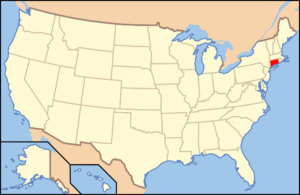
AOPA Submits Comments on Connecticut Medicaid Policy Changes on Cranial Orthoses and other L Codes

ctOn March 30, AOPA submitted comments on two recently announced Connecticut Medicaid policies.  The proposed changes include the elimination of some L-Codes from the Connecticut Medicaid fee schedule due to lack of utilization, as well as a 10% reduction in the fee schedule for several custom fitted or custom fabricated orthosis HCPCS codes.

One proposed reimbursement change that is of particular concern is a 40% reduction in Connecticut Medicaid reimbursement for cranial remolding orthoses described by HCPCS code S1040.  The notice from Connecticut Medicaid states that the 40% reduction is to “ensure consistency with reimbursement rates of other states and to contain costs.”  In addition to the proposed 40% reduction in reimbursement for cranial remolding orthoses, there are also proposed changes to the prior authorization process for cranial remolding orthoses that may lead to unnecessary and inappropriate delays in the provision of quality care.

AOPA submitted comments on the March 30th deadline and provided a letter that 73 AOPA members in Connecticut plus supplier members submitted through the AOPAVotes website. Read AOPA’s comments.

If you have any questions, please contact Joe McTernan at jmcternan@AOPAnet.org or 571/431-0811.

House Positioning on H.R. 1628, the ‘American Health Care Act’

As you are aware from the major news outlets, after a substantial ‘run-up’ and negotiations, the House leadership cancelled votes that had been slated for both Thursday and Friday on the House legislation to repeal and replace the Affordable Care Act (ACA), entitled H.R. 1628, the “American Health Care Act” (AHCA). What will this mean, at least in the short term, for O&P patients and providers?

While not in the original bill, one turn in the negotiations was announced as an amendment to the bill so that H.R. 1628 would have resulted in repeal of the ACA’s “essential health benefits.” There is a general consensus that this action would have posed potentially significant challenges for some, perhaps many of our patients and would likely have been detrimental for O&P. The assurance that “habilitative and rehabilitative services” (it was one of the ten categories is the ACA that every federally-approved health plan was required to include) must be included in health plans would have been eliminated.

This action, coupled with the bill’s plan to change the federal Medicaid matching funds provided to the states could have been expected to prompt a renewal of more state efforts to slice Medicaid, similar to AZ a few years back dictating ‘no microprocessors, and no orthotic coverage for anyone over 18.’ When Medicaid was enacted decades ago, the law did not articulate an explicit assurance of an O&P benefit for these patients… the ACA’s ‘essential health benefits’ did serve as a fairly explicit assurance for O&P care, which largely blocked such state Medicaid O&P cutback efforts.

Another component of the House repeal and replace plan was authorization for the sale of health insurance policies across state lines, a step that concerned many in the patient community. It would have resulted in requiring ‘falling back’ largely on what protections are offered via state-by-state parity law protections. The much-discussed selling of insurance across state lines would also have an important impact, as it would create a ‘least common denominator’ effect. Hypothetically, if CA has a strong parity law with patient protections, and UT does not, when that UT carrier sells a policy in CA, it will not have to measure up to the stricter CA parity provisions.

With no vote having occurred on H.R. 1628, there is at present not a bill on any fast track in either House or Senate to repeal and/or replace the Affordable Care Act, so in the short term, the status quo prevails, albeit with limitations as to the number of options enjoyed on the insurance exchanges by patients in many areas of the country, and other shortcomings of the ACA. Obviously, this is a complicated picture, with lots of uncertainties as to if and when other legislative initiatives may move on this. AOPA will continue to keep you informed of significant developments. Those who tracked the House proceedings, and who have attended recent AOPA Policy Fora saw a couple of familiar faces often referenced in the H.R. 1628 deliberations. Both Rep. Mark Meadow (R-NC) the Chair of the House Freedom Caucus, and Rep. Charlie Dent (R-PA) have spoken at the AOPA Policy Forum in recent years. Both were interviewed frequently, and their views often mentioned in accounts of the House process and proceedings. Dont be left out – come to the AOPA Policy Forum, in Washington, May 24-25. Become an insider on what is happening in health care, and assure that your voice is heard! Learn more about the Policy Forum.

ABC to Sponsor Presidential Papers at 2017 AOPA World Congress

WASHINGTON, DC – The American Orthotic & Prosthetic Association (AOPA) is pleased to announce that the American Board for Certification in Orthotics, Prosthetics & Pedorthics (ABC) will sponsor the 2017 World Congress’ Presidential Papers – representing the top-ten clinical education submissions of original research and backed by a full manuscript. The Presidential Papers will be published in a special supplement of the Journal of NeuroEngineering and Rehabilitation. ABC’s commitment and support will make this research available worldwide through the journal and accompanying search indexes such as Medline.

ABC will also be an official partner of the 2017 AOPA World Congress along with other international partner organizations. The World Congress will be September 6-9, 2017 in Las Vegas, NV, USA.

“We are pleased to have a role in positively impacting the dissemination of scientific O&P research, clinical care and methodologies, not only to ABC certifees but also to those who will utilize this research to impact the future of the profession, ” said ABC’s President Eric Ramcharran, CPO.

“ABC has once again proven its commitment to O&P education and supporting professionals in the field. We are excited to present the Presidential Papers at the 2017 World Congress, and are honored by ABC’s sponsorship,” said AOPA’s President Michael Oros, FAAOP, CPO, LPO.

ABC joins the following organizations as World Congress partners: Orthotics and Prosthetics Association of India (OPAI), the Charcot Marie-Tooth Association (CMTA), Amputee Coalition, ConFairMed, MexicoNational Member Society of ISPO, Orthotics Prosthetics Canada, US Member Society of ISPO, and Uniting Frontiers.

Questions? Please contact Lauren Anderson, AOPA’s Manager of Communications, Policy, and Strategic Initiatives at 571/431-0843 or landerson@aopanet.org.